
8 October 2026
Revamp or Rebuild? How to Fix an Old Website Without Losing the Traffic and Leads It Already Has
Your website is four or five years old. It still loads, it still has your contact details, and it probably still brings in some enquiries. But it looks dated, it’s awkward on a phone, and every time someone suggests changes it turns into a big job. The question is whether to patch it, redesign it, or start over, and what to protect along the way.
First, work out what’s actually wrong
“The site looks old” is a symptom. Before you spend anything, sort the problem into one of these:
- A design problem. The layout and branding feel dated, but the structure and content still work.
- A conversion problem. Visitors arrive but don’t enquire, because the contact path is buried, the form is too long, or the page doesn’t answer their question quickly.
- A technical problem. The site is slow, breaks on mobile, runs on outdated software, or can’t be edited without a developer.
- A visibility problem. Traffic has dropped, or competitors outrank you for searches you used to win.
Most old sites have more than one. The mix decides what you need.
Revamp vs rebuild: a simple test
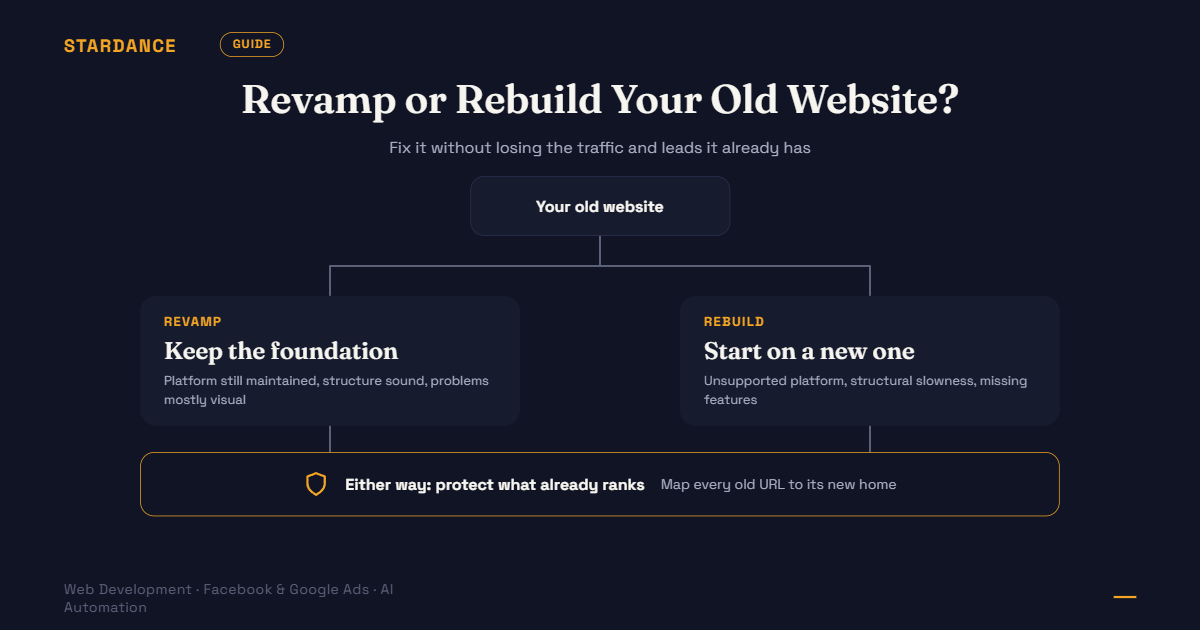
Revamp (keep the foundation, improve what sits on top) usually makes sense when the platform is still maintained, the site structure is sound, and the problems are mostly visual or content-related.
Rebuild (new foundation) usually makes sense when:
- The platform or theme is no longer supported, or every plugin update risks breaking something.
- The site is slow and the cause is structural, not a few oversized images.
- You need features it can’t support, such as local payment methods, booking logic, or integrations with your other systems.
- Making a simple content change requires calling your developer.
If you’re unsure, a short audit costs far less than rebuilding something that only needed a revamp, or revamping something that needed a rebuild.
The mistake that costs the most: throwing away what already ranks
A redesign can quietly wipe out years of search visibility. The usual causes:
- Changing URLs without redirects. If
/services/web-designbecomes/what-we-do/websitesand nothing points the old address to the new one, any page that ranked or collected links starts from zero. - Deleting pages that bring in traffic because they don’t fit the new design.
- Rewriting content that was ranking without checking what made it work.
- Launching with leftover staging settings, such as a “do not index” tag that tells Google to ignore the new site.
Before you change anything, list your pages, note which ones get traffic and enquiries, and map every old URL to its new home. Pages that already perform get protected, not reinvented.
What a good revamp fixes, step by step
- Audit what you have. Traffic by page, enquiries by page, speed, mobile experience, and which pages rank for what.
- Fix the conversion path first. A clear call to action above the fold, a short enquiry form, and a WhatsApp option, since that’s how many Malaysian customers prefer to reach out.
- Rebuild for mobile first, because most visitors are on phones.
- Speed up the site. Compress images, remove unused scripts, and use hosting that suits your traffic.
- Set up tracking properly. Know which pages and which campaigns produce leads, so you can judge the new site against the old one.
- Launch with a redirect map and a post-launch check, watching traffic and enquiries for the first few weeks.
Where the rest of your marketing fits in
A revamp isn’t only a web project. Done well, it improves everything connected to it.
- Ads. If you run Facebook or Google Ads, your landing pages decide how much of that spend turns into leads. Revamping the pages ads point to often lowers your cost per lead without touching the ad budget. Test campaigns on the new pages once they’re live, and keep tracking consistent so before-and-after results are comparable.
- SEO, GEO and AEO. The revamp is the best time to fix the foundations search engines and AI tools rely on: a clear site structure, proper headings, schema markup, direct answers to customers’ questions, and accurate business details. Building these in during the rebuild is cheaper than retrofitting them later.
- Automation. Once the new forms are in place, route enquiries automatically to the right person, notify the team on WhatsApp, and log every lead in one place. A fast, polished site loses its value if leads then sit unread for hours.
- ChatGPT ads. If you plan to test them, a landing page built for answering a specific question will matter. A revamped site gives you pages that can do that, rather than sending people to a generic homepage.
How to know the revamp worked
Compare these numbers before and after, over the same length of time:
- Conversion rate (visitors to enquiries)
- Total enquiries per month
- Cost per lead from paid campaigns
- Page speed on mobile
- Organic traffic to your key pages
If traffic dips briefly after launch, that’s normal while search engines re-crawl the site. If enquiries or key rankings keep falling after a few weeks, the redirect map is the first place to check.
Not sure whether your site needs a revamp or a full rebuild, or worried about losing your rankings in the process? [See how we approach website revamps and rebuilds →]